
Roof condensation and ventilation
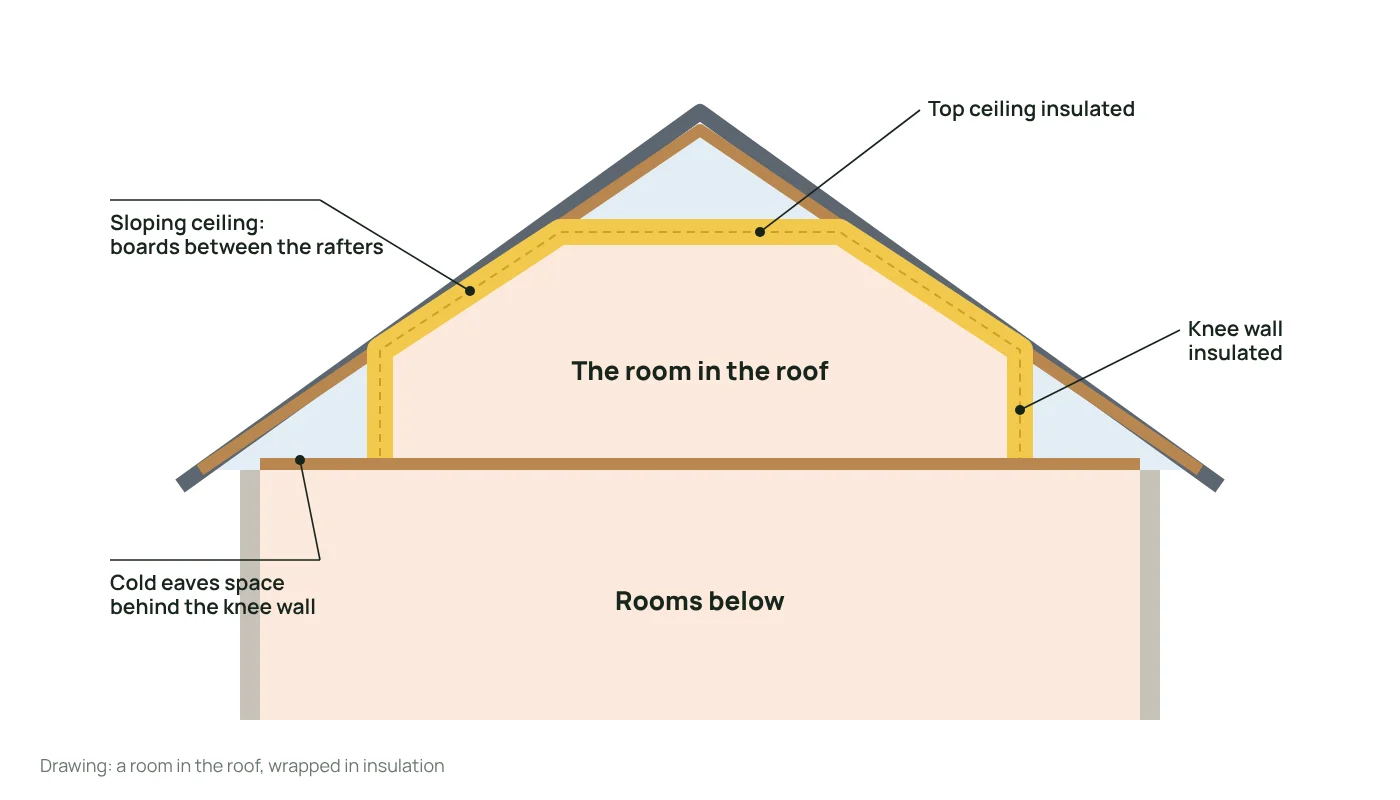
A cold attic needs air moving through it, in at the eaves and out at the ridge or vent tiles, so moisture from the house doesn't settle on the felt and timbers. Insulation at the rafters needs a 50 mm gap under old felt, and every insulated roof needs the warm side sealed against moist air.
Why an insulated roof can get damp, and the details that stop it.
Free and no obligation. Your plan goes to one contractor, not a list.
- 50 mmair gap under the felt at the rafters
- 2eaves to ventilate on a cold attic
- 1vapour control layer, warm side
- 7%of BER roofs show no insulation
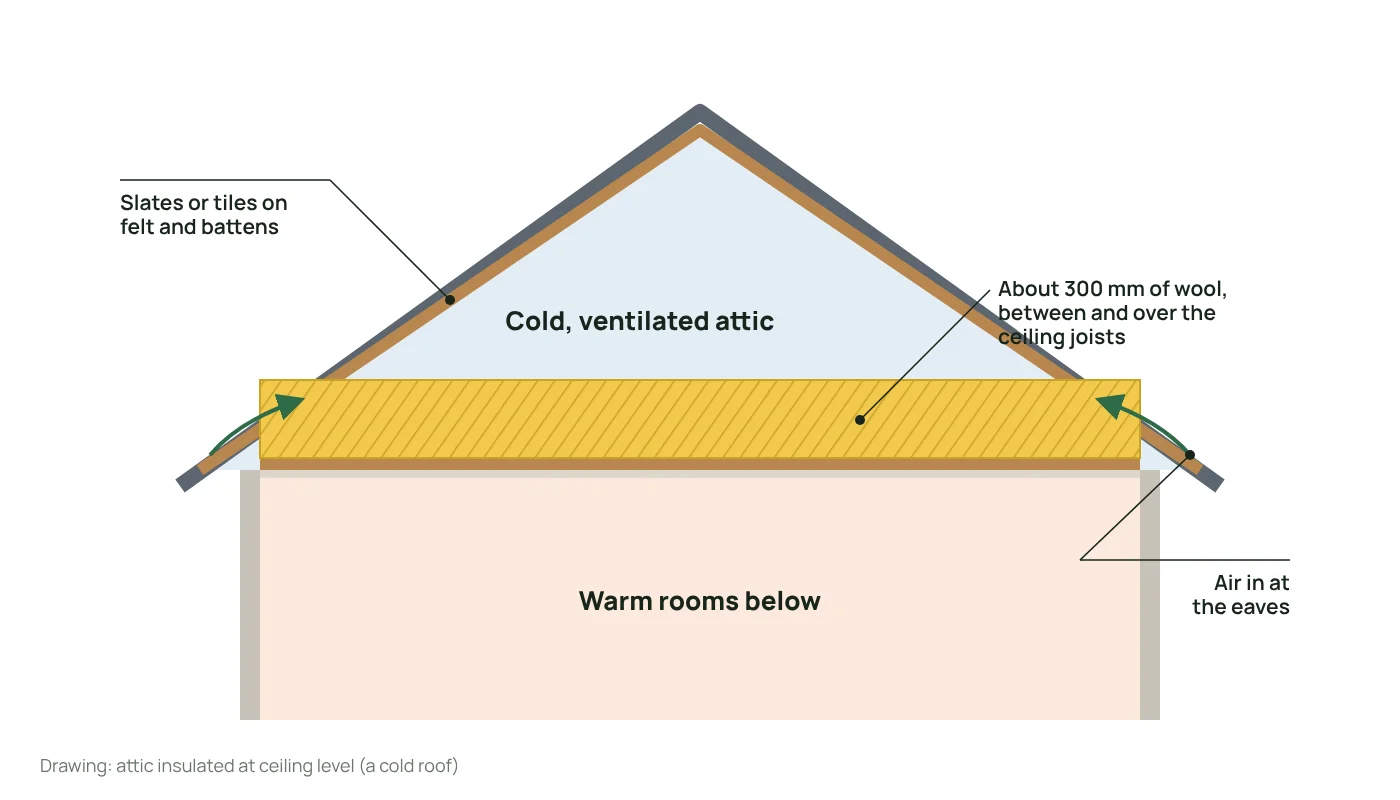
Why insulating can make a roof damp
Before insulation, heat leaking up kept the attic warm and dry. Once the floor is insulated the attic gets colder, so any moist air that gets up from the bathroom and kitchen condenses on the cold felt and slates. That's why a cold attic must be ventilated, and why the ceiling below should be as airtight as possible.
- Keep the eaves open with trays or vents so the wool doesn't block them.
- Add vent tiles or a vented ridge where the felt isn't breathable.
- Seal the ceiling: the hatch, light fittings, pipes and cables through it.
- Vent fans to outside, never into the attic.
Plan your roof insulation
A few quick taps, and your plan fills in as you answer: the right method for your roof, what it costs, the grant and the standard to ask for. Contact details come last, and only if you want a contractor to price it.
Attic floor insulation, semi-d or end of terrace: €1,800 to €2,101 before the €1,500 SEAI grant, so about €300 to €601 to pay.
How the estimate is worked out
Attic floor insulation uses what SEAI-registered contractors were paid for each kind of home in 2026 and what an Irish installer charges, with the SEAI grant taken off. A room in the roof and a flat roof are priced per m² of the area you enter: rafter boards with a plasterboard finish, or a warm roof with a new membrane. VAT is included. Use it to plan with. It isn't a quote: a contractor prices your roof after a survey.
Signs of trouble
- Droplets or black mould on the underside of the felt in winter.
- Damp or stained insulation near the eaves.
- Mould on the ceiling of a room in the roof, along the slope or at the knee wall.
- A musty smell when the hatch is opened.
Most can be fixed with ventilation and sealing; rot in rafters or battens needs a roofer.
Questions before you insulate
Why is there condensation in my attic after insulating?
The attic is colder now, so moist air from the house condenses on the felt. Ventilate the eaves and seal the ceiling.
Does a warm roof need ventilating?
A warm flat roof doesn't: the boards are above the deck. A pitched roof insulated at the rafters needs a gap under old felt.
Can I block the eaves vents?
No. They keep the roof timbers dry.
Every guide and county page
Methods
Costs, grants and rules
Keep the heat under your roof
Pick the roof, what's there now and the home to see the method and the cost. When you want a firm price, your plan goes to a single vetted insulation contractor for your area.